
Blog 6: Early Findings
The Bristol Quiet Areas Plan is exploring how quieter, nature-rich urban spaces can better support wellbeing, inclusion and confidence in navigating the city.
The soundwalks and engagement activities show that these spaces are shaped as much by access, arrival and sensory experience as by noise levels alone.
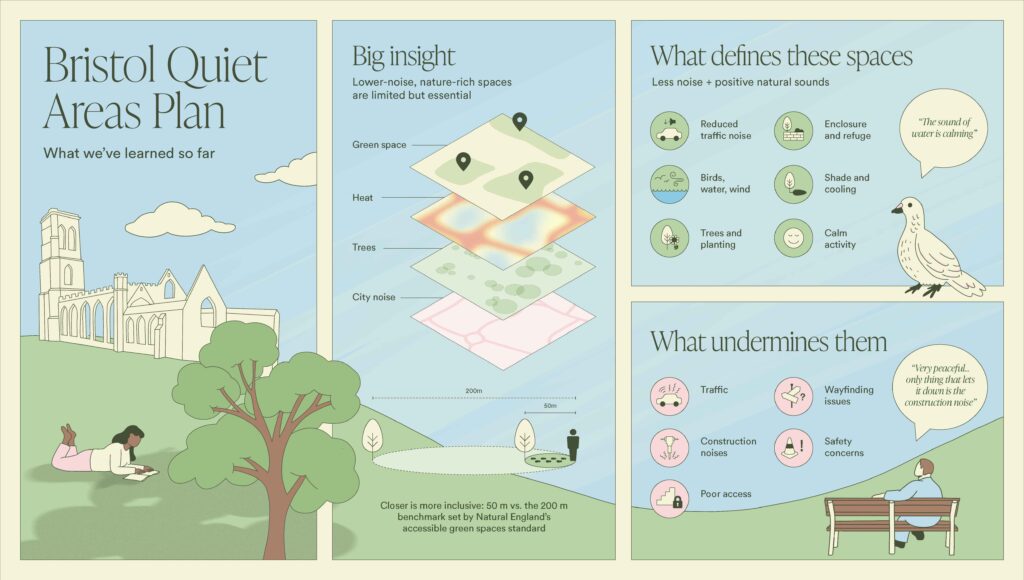
Key findings emerging from the first phase include:
- Positive natural sounds such as birds and water are important
- Shade, planting and enclosure help spaces feel calmer
- Construction noise and traffic quickly undermine experience
- Access and wayfinding strongly influence comfort and confidence
- Quieter spaces closer to everyday routes may support more inclusive access
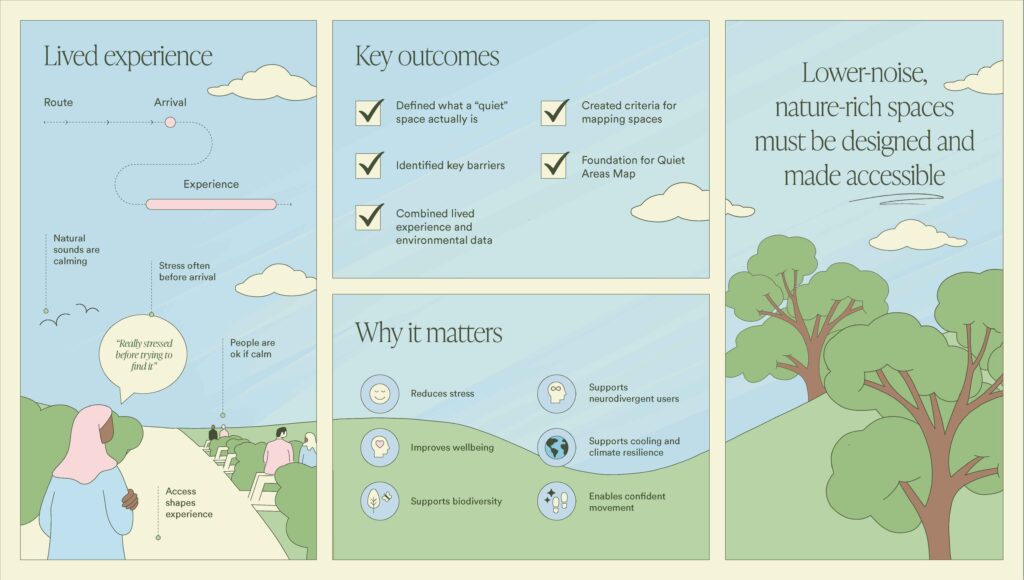
The findings are now shaping the next stages of the project, including:
- Extending site plans to show approximately 50m around each quiet space
- Identifying best entrances, nearby toilets, benches and landmarks
- Creating step-by-step journeys into spaces rather than focusing only on the destination
- Showing where quieter and calmer areas are located within sites
- Improving how sensory information and accessibility are communicated online