
How to find quiet places in a hotter city: new UoG research provides answers
University of Gloucestershire research is showing how better communication can help more people find and confidently access quieter, cooler places in cities.
As UK cities become hotter and noisier, the new research – funded by UK Research and Innovation – has found that one of the biggest barriers to accessing quieter, cooler places is not their absence, but knowing where they are, what to expect and whether they meet people’s needs.
Working alongside neurodivergent participants, the Bristol Quiet Areas Plan co-designed and tested an inclusive approach across three Bristol city centre pilot sites – Temple Church Gardens, St Stephen’s Church Gardens and Millennium Promenade – to identify, define and communicate quieter, nature-rich green and blue spaces, helping more people locate and confidently access them.
For many people, especially those who are neurodivergent or experience sensory overload, city centres can be noisy, stressful, and increasingly uncomfortable during hot weather. The research found that providing clearer information about quieter, shaded areas can help people feel more confident in navigating and enjoying urban environments.
Environmental noise is the second-largest environmental health risk in Western Europe after air pollution. At the same time, more frequent heatwaves are increasing the importance of cooler, shaded green and blue spaces for public health and climate resilience. The study suggests that improving how people find, understand and use these existing places could become an increasingly important climate adaptation strategy for towns and cities.
Through soundwalks, workshops, accessibility audits and co-design activities, participants identified not only quieter spaces but also the information people need to find and use them with confidence.
The research found that quiet spaces are not silent. Instead, they have lower noise levels than their surroundings and are characterised by positive natural sounds such as birdsong, rustling leaves and flowing water, alongside opportunities to pause, rest and recover.
Key findings
- Quiet spaces already exist, but many people do not know where to find them.
- Accessibility is about communication, information and confidence, not just physical access.
- Quiet, shaded green and blue spaces can provide cooler places to pause during hot weather.
- The journey to a space is often as important as the destination.
- Familiar landmarks are often more useful than street names for navigation.
- Toilets, seating, shade and nearby facilities influence whether people choose to visit.
- Social stories help people feel more confident visiting unfamiliar places.
- Clear maps, icons and visual information are preferred over text-heavy content.
- “Keep it simple” was the project’s most consistent message.
Sarah Jones-Morris, co-investigator and lecturer in landscape architecture at University of Gloucestershire, said: “Our research shows that accessibility is as much about information as it is about physical infrastructure. Helping people discover and confidently access quieter, nature-rich places could improve health and wellbeing, support more inclusive experiences, and encourage more people to visit, stay longer and participate in city life, benefiting communities, local economies and the environment alike.”
Kathryn Davis, CEO of Visit West, said: “As we continue to improve accessibility information for both visitors and local people, we’re pleased to now host the Bristol Quiet Areas map on the Visit Bristol website. It provides valuable content highlighting how these spaces can support neurodivergent people, as well as how to find the spaces and use them, helping to make Bristol an even more welcoming and inclusive city for everyone.”
VisitEngland Accessibility and Regenerative Tourism Lead, Ross Calladine said: “The Bristol Quiet Areas Plan is a great example of what genuinely inclusive tourism looks like in practice. By working directly with neurodivergent people, it recognises accessibility as an information challenge as much as a physical one. The Quiet Areas Map and social stories it has produced give visitors and residents the knowledge and confidence they need, to get the most out of Bristol city centre.”
Patrick McAllister,Green Party Councillor for Hotwells and Harbourside, added: ““I’m delighted that Bristol is continuing to see the rollout of Quiet Areas, including one in Hotwells & Harbourside at Millennium Promenade. These areas provide a vital place to escape the noise of the city and enjoy a calm and cool oasis during the day. Especially as our weather gets hotter, the Bristol Quiet Areas Plan shows how better information can help more people discover quieter places that support wellbeing, improve accessibility and make Bristol more welcoming for everyone.”
The project has produced a new Bristol Quiet Areas Map hosted by Visit West, alongside maps, icons and social stories designed to help people identify and confidently access quieter spaces across Bristol city centre. A Geographic Information System (GIS) dataset has also been shared with Bristol City Council through the Open Data Bristol and PinPoint mapping platforms, creating a lasting research legacy that can inform planning, accessibility and public information.
The findings have implications for the design, protection, and enhancement of outdoor places; planning; public health; accessibility; inclusive tourism; and green infrastructure. They demonstrate how communicating environmental information in more inclusive ways can improve access to quieter, cooler, nature-rich spaces, increase confidence, and help towns and cities make better use of existing environmental assets without major physical intervention.
The approach could now be expanded across Bristol, tested in other UK towns and cities, and inform future guidance on inclusive design of outdoor spaces, accessible tourism, and climate adaptation.
The Bristol Quiet Areas Plan, led by University of Gloucestershire, brought together researchers, neurodivergent participants, accessibility specialists, designers, planners and tourism partners to co-design an inclusive approach to identifying and communicating quiet spaces.
The Bristol Quiet Areas Plan was delivered in partnership with Visit West, Disability Inc (part of WECIL), Place Changers, Hush City and Tranquil City, with support from an interdisciplinary advisory group including experts in soundscapes, accessibility, planning and urban design. Graphic design was undertaken by Savannah Vize.
The project provides a practical, transferable model that could help towns and cities across the UK make better use of existing green and blue infrastructure to improve inclusion, climate resilience and quality of life.
The project was supported by a grant from the Ecological Citizens Network+, an EPSRC-funded network led by the Royal College of Art in collaboration with the University of York and Wrexham University (EP/W020610/1).
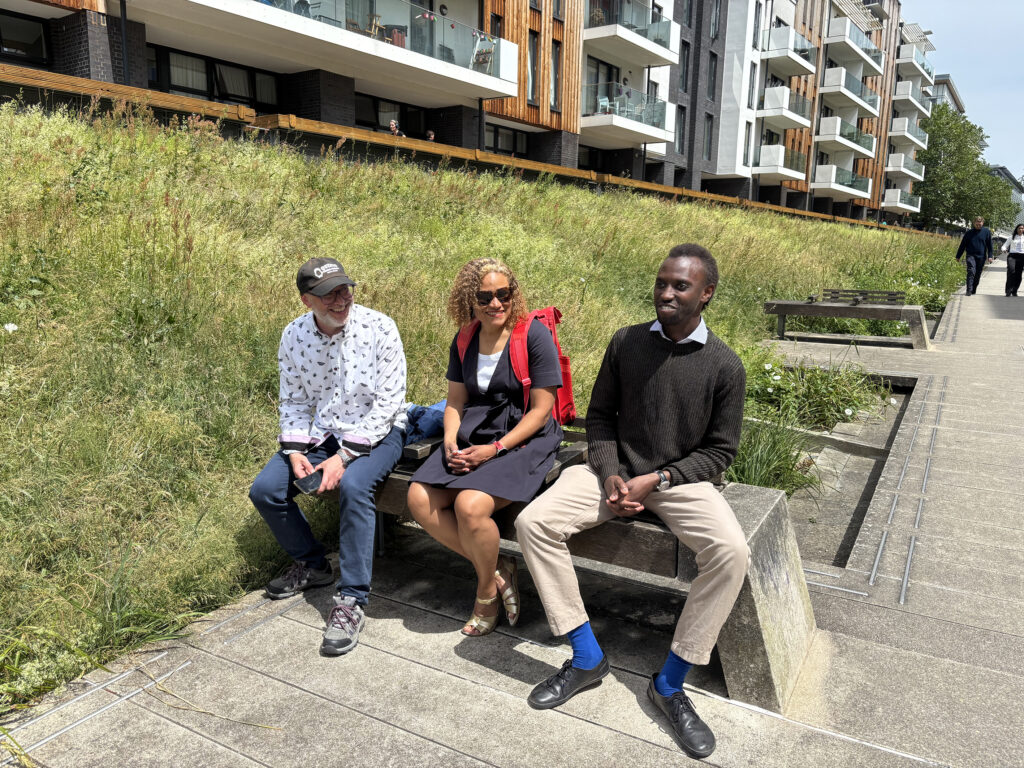
Main image: Contributors pause during a Bristol Quiet Areas Plan soundwalk beside Bristol Harbour to discuss the surrounding soundscape. The session explored how quieter waterfront environments and natural sounds contribute to accessible urban spaces for neurodivergent people.