
Blog 2: Health and outdoor quiet spaces
We aim to understand what makes green and blue spaces genuinely accessible, comfortable, and restorative for neurodivergent people and for all of us. Co-creating this project with Disability Inc (WECIL), Visit West and neurodivergent adults whose lived experiences shape the work.
What is a healthy, quiet outdoor space?
A healthy quiet space is not about silence. It is about sound quality and environmental richness.
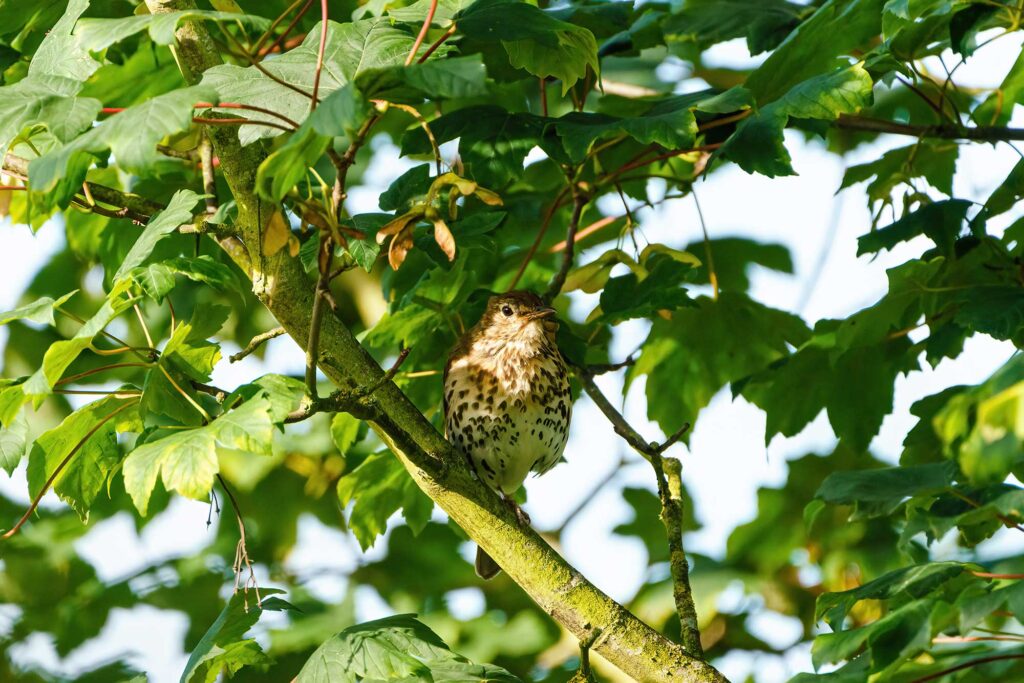
It is somewhere you can hear birdsong, water or leaves moving in the wind, rather than dominant traffic or mechanical noise. The acoustic rhythm feels legible and calming – not unpredictable or overwhelming.
Research shows that natural sounds support stress recovery and mental restoration. Studies also demonstrate that greater natural diversity – more trees, plants, birds and water – is strongly associated with improved mental wellbeing, with benefits lasting for hours after leaving the space. It is not just “green” that matters, but biodiverse green.
For neurodivergent people, sound environments can be especially significant. Lived-experience research shows that distress is often linked to unpredictability, layering and a lack of control, rather than volume alone. Natural sound tends to feel restorative; mechanical noise can accumulate and overwhelm.
Sound, however, is only one part of the picture. A healthy, quiet space also includes:
- Shade and cooling, particularly in heat-vulnerable urban areas
- Access to green and blue infrastructure
- Seating and safe routes
- Clear legibility and reduced sensory clutter
- A feeling of psychological comfort
In short, it is where environmental quality and inclusive design meet.
Importance of quiet spaces in cities
Cities are complex, symbiotic systems. Sustainability is not only environmental – it is social, economic, and cultural. Quiet spaces sit at the intersection of all four.
Social
In Bristol, around 70% of residents are satisfied with parks and green spaces, yet this drops significantly in the most deprived areas. Access and quality are uneven.
Having green space nearby does not guarantee access to a genuinely quiet refuge within walking distance. Research in European cities shows that only a minority of residents can reach a truly quiet green area during the day.
For neurodivergent people, clearly identified quiet refuges can increase confidence and independence when navigating the city. They provide contrast within the urban fabric – moments of pause within movement. Thoughtfully integrated art or heritage features can deepen sensory engagement without overwhelming it.
Economic
Healthier citizens are more productive citizens. Access to nature supports long-term mental and physical health, reducing strain on services and enabling participation in work and education.
Investment in green infrastructure, including tree canopy, shade, and biodiverse planting, supports both public health and economic resilience.
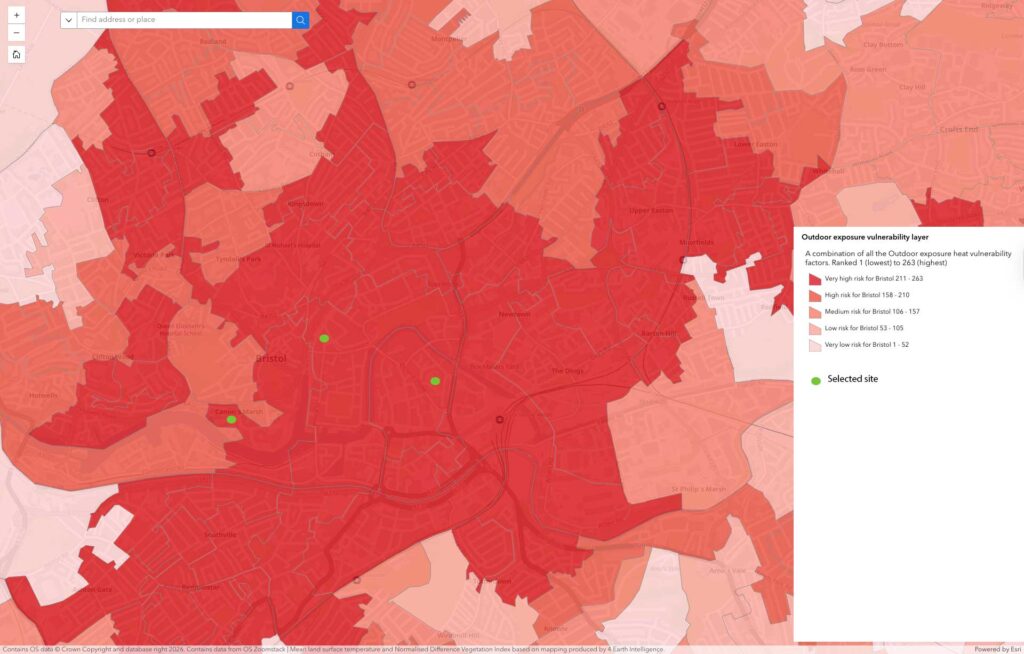
Outdoor exposure vulnerability layer
A combination of all the Outdoor exposure heat vulnerability factors. Ranked 1 (lowest) to 263 (highest)
Darkest red: Very high risk for Bristol 211 – 263
Dark red: High risk for Bristol 158 -210
Medium red: Medium risk for Bristol 106 – 157
Pale red: Low risk for Bristol 53 -105
Palest red: Very low risk for Bristol 1 -52
Environmental
Natural soundscapes are indicators of ecological health. Tree canopy, vegetation and water features provide habitat, cooling and biodiversity, while also shaping the acoustic environment. Biodiverse spaces deliver stronger mental health benefits than low-diversity landscapes.
The Office for National Statistics recognises the economic value of urban natural capital in supporting recreation, health and productivity.
Conclusion
The Bristol Quiet Areas Plan recognises that quiet is not a luxury – it is essential urban infrastructure.
Evidence shows biodiversity improves mental wellbeing. Research demonstrates that access to genuinely quiet green areas is uneven, and local data shows that satisfaction with green space is lowest in deprived communities.
By working with neurodivergent adults to define what feels restorative, the project reframes quiet spaces as part of ecological citizenship.
Mapping and protecting them supports more-than-human life, improves wellbeing and encourages low-emissions movement between green and blue spaces.
Healthy outdoor quiet spaces strengthen cities socially, economically and environmentally. They build resilience in a warming climate, increase access and confidence, and create places where people and nature can thrive together.
References
Hammoud, R. et al. (2024). Smartphone-based ecological momentary assessment reveals an incremental association between natural diversity and mental wellbeing.
https://doi.org/10.1038/s41598-024-55940-7
Luquezi, L. G. et al. (2025). Assessing accessibility to quiet and green areas at the city scale using an agent-based transport model. Landscape and Urban Planning, 263, 105452. https://doi.org/10.1016/j.landurbplan.2025.105452
Rosas-Pérez, C. et al. (2025). More than Noise: Lived Experiences of Autistic People in Real-Life Acoustic Environments. Applied Acoustics. https://doi.org/10.1016/j.apacoust.2025.110581
Thornhill, I. et al. (2025). Natural soundscapes as a disciplinary bridge in pursuit of sustainability. Ecosystems and People.
Bristol City Council (2025). JSNA Health and Wellbeing Profile 2024/25 – Promoting Healthy Urban Environments
Bristol City Council Keep Bristol Cool (2024) – the Keep Bristol Cool Mapping Tool
; ?> "Visit the homepage")