
'Why people must be placed at heart of climate change conversation'
Amid heatwaves across the UK, University of Gloucestershire’s Head of Research says individuals, families and communities must be placed at the heart of the response to climate change.
Professor Matt Reed believes that people are too often left out of conversations about major technological, economic, and social change, despite being directly affected by them. This exclusion can have damaging consequences for individuals, families, and communities.
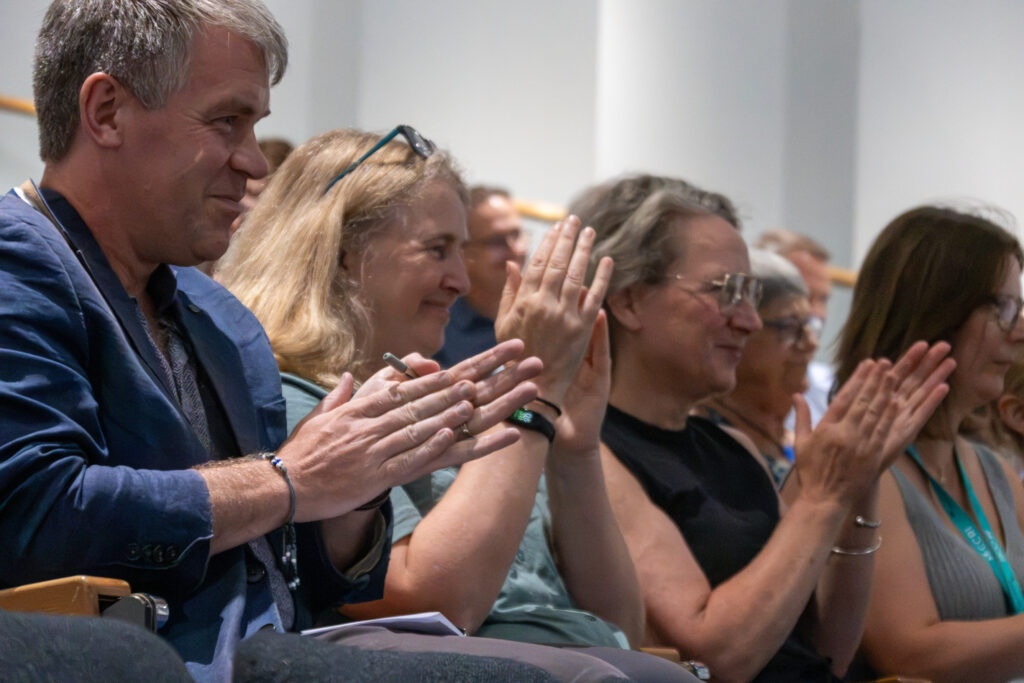
Presenting his inaugural lecture at the University, entitled ‘Climate Change: As if people mattered’, Professor Reed stressed the importance of increased community participation, based on his own research and personal experiences, in response to climate change.
Professor Reed, whose research includes studies around organic farming, local food provision, urban agriculture and agri-environmental schemes, said: “All too often, people are absent from the discussion of climate change and how we can build a transition in which people can meaningfully shape and take part.
“People cannot simply be told that some form of Armageddon will be realised unless they go along with proposed changes. The arguments for a transition to a de-carbonised society often follow the same patterns and indeed rhetoric, and then its proponents are surprised that many of our fellow citizens are sceptical and reluctant to join in.
“They must be shown that change can be practical, democratic and rooted in everyday life. “
Drawing on his family history to illustrate his point, Professor Reed reflected on growing up in a community of rural engineers, shaped over centuries by innovation and manufacturing, including the development of the first powered flying machine.
He described how, during the 1980s, rural life was increasingly being framed through agriculture, leisure and tourism, which led to a great deal of damage to his and many other rural communities.
Professor Reed said: “We became a more remote community as public transport was cut and, in the case of the railways, abandoned altogether. Spatially, the distances remained the same, but socially, we were distanced and connected only by private cars and trucks.
“Our community altered and our role was written out of the story. Now, when a group comes with an abstract argument about the need for a change, I raise an eyebrow.”
Professor Reed pointed to contemporary examples of poorly managed transition, including the rapid adoption of smartphones and digital platforms by children, where communication technologies have brought connection and creativity but also exposed young people to harmful corporate practices and content.
“Arguments for a more climate-friendly society need to compete with and honour those sorts of lived experiences,” he said. “They cannot simply batter people with stories of disaster.”
Professor Reed highlighted the history of sustainable agriculture as a model for a more participatory approach to environmental change. For more than a century, he said, the sustainable agriculture movement has developed practical alternatives through experimentation, debate and bottom-up innovation.
Professor Reed said: “They have developed, from rural areas, innovative practices that work and are deeply pragmatic, which address the needs of people, animals, and nature.
“This movement has changed how we think about food and farming. It has helped shape debates about antibiotics, pesticides, herbicides, feedlots, GM crops and ultra-processed food. The alternative it has created is available now, it works, it is delicious, and it can be scaled.”
At a time of profound global disruption, Professor Reed believes there are reasons for hope. Practical solutions already exist, he said, and communities should be supported to shape the changes that affect them.
Professor Reed said: “While it is easy to become despairing, there is plenty of evidence to be more positive, and to reassure ourselves and our fellow citizens that we have practical solutions at hand, which will lead quickly to better outcomes for all of us.
“Equally importantly, they can be part of that change, they can shape it,and do so in dialogue with others.”
Main image: Professor Matt Reed delivering his inaugural lecture, ‘Climate Change: As if people mattered’