Skip to content
University of Gloucestershire
Postgraduate taught

Architecture*

MArch

Course options

Choose a study option:
Choose a start date:
Study type
Full Time
Course length
2 Years
Campus
Francis Close Hall, Cheltenham
UCAS Code
N/A
Textured scratch overlay.
Wanted: Creatives

Why choose UoG?

Industry-connected projects, a collaborative studio culture, and hands-on experience help you build a strong design voice, develop real-world skills, and shape your architectural career.

The MArch at UoG allows you to explore how architecture can respond to the most pressing issues of our time, from climate resilience and housing pressures to social equity, wellbeing and the changing needs of communities. Every project asks you to engage with real opportunities and real problems, developing designs that are imaginative, purposeful and grounded in contemporary realities.

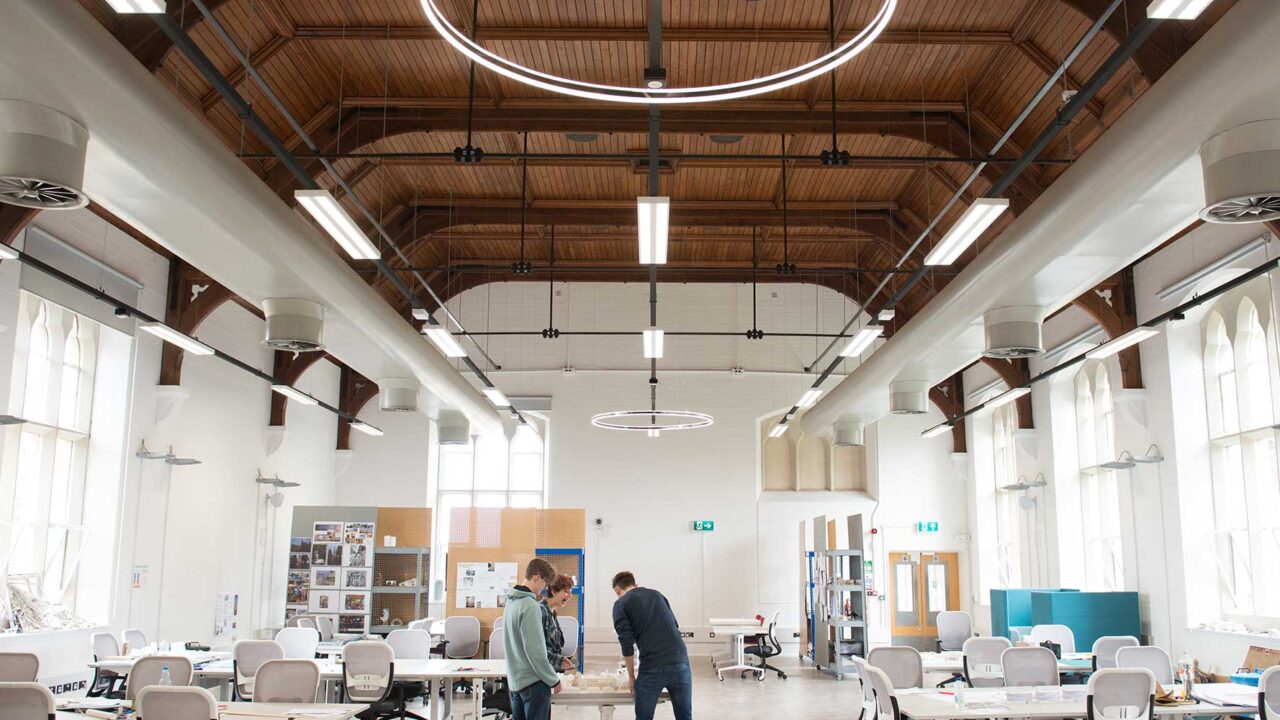
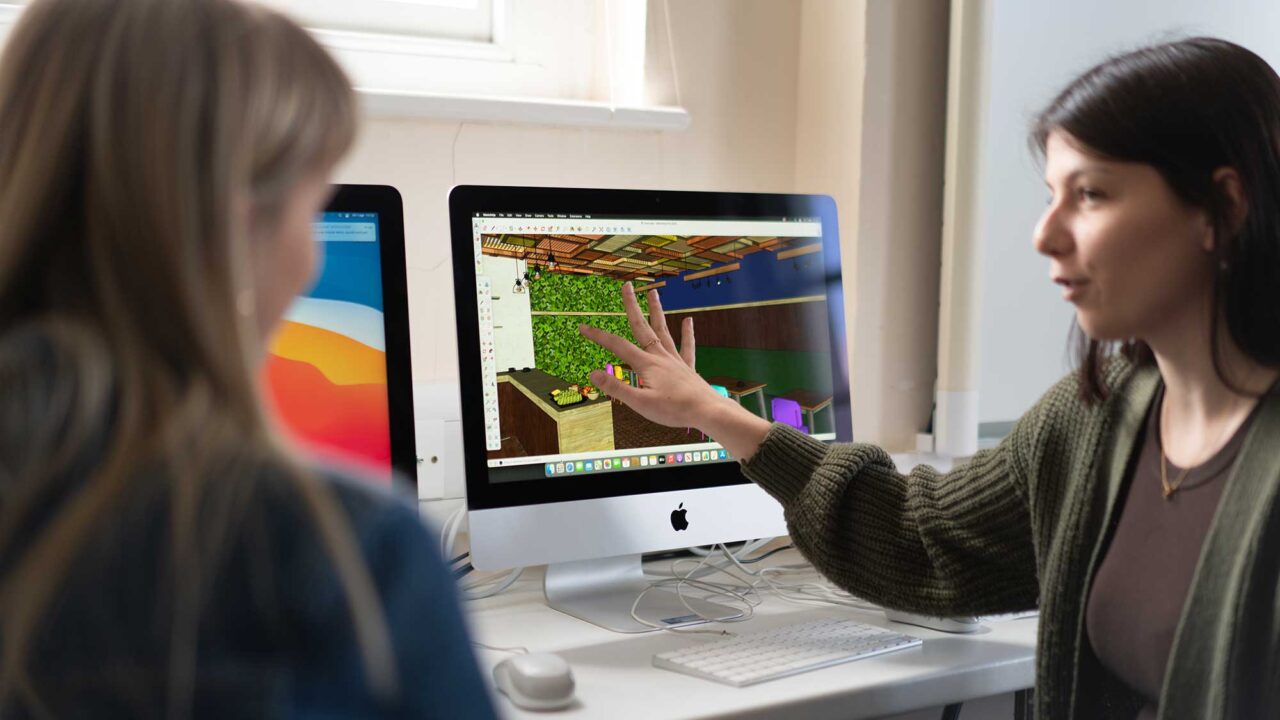
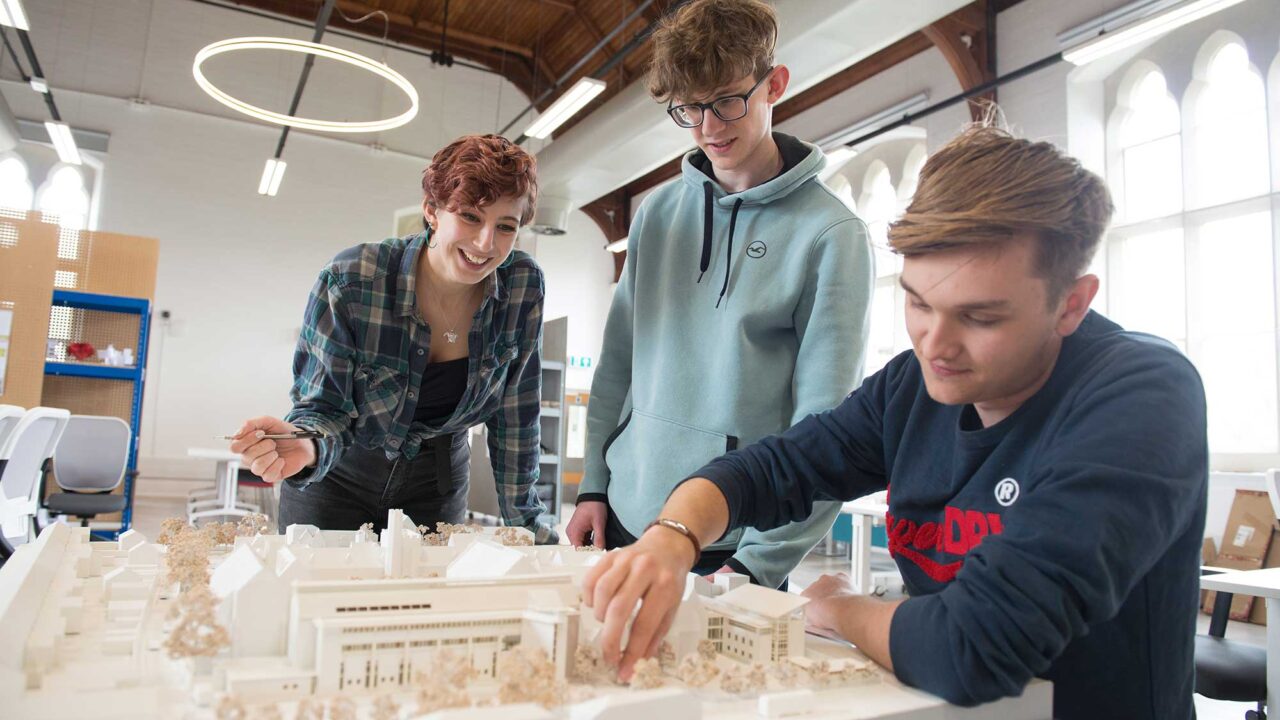
You’ll be supported to experiment, prototype and test ideas using industry-standard facilities, from digital fabrication and model making to immersive visualisation tools and large scale making. This hands‑on, exploratory approach pushes your creativity and sharpens your technical confidence while strengthening the human values that matter in contemporary practice: social responsibility, wellbeing, accessibility, community engagement and environmental stewardship.

This course empowers you to shape your own architectural identity, build a strong design voice and develop the confidence to take your ideas further. Whether your future lies in practice, research, or in an emerging spatial discipline, the course gives you the space, tools and guidance to define your direction and the momentum to get there.

*The MArch is in the process of being accredited by the Architect’s Registry Board (ARB), with full accreditation anticipated by September 2026.

The MArch is delivered through an integrated, practice aligned curriculum that mirrors the rhythm and expectations of contemporary architectural work. Studio sits at the heart of your learning, with design, technology, sustainability and professional practice brought together through connected projects rather than taught as separate subjects. This creates a learning environment where ideas and conversations flow naturally across modules.

You’ll experience a balanced mix of lectures, seminars, workshops and studio tutorials. Lectures introduce key concepts, while seminars give space for discussion and critical reflection. Most learning happens through guided studio time, supported by regular one-to-one and small group tutorials. Alongside this, you will develop strong independent working habits through self-directed study, research and project development.

The course supports your progression toward architectural accreditation and aligns with current sector expectations. You will work with contemporary tools and methods, including the responsible use of AI for research, analysis, visualisation and iterative design.

Assessment is continuous and primarily portfolio based, with summative studio presentations focusing on design quality, critical thinking, technical resolution and professional communication. Practising architects, specialists and guest lecturers contribute throughout the year, keeping your learning connected to real practice and emerging opportunities.

Graduates of the MArch at UoG progress into a wide range of careers across architecture and the wider built‑environment sector.

The course prepares you for roles in architectural practice, from early design and concept development to technical delivery, sustainability consultancy, community engagement and spatial research.

Many graduates follow established pathways within architecture, urban design, housing, regeneration, environmental design and emerging digital and spatial disciplines.

The focus on contemporary skills including AI, digital fabrication, immersive visualisation and collaborative design systems supports careers in both traditional practice and new areas of innovation.

Continuous, portfolio‑based assessment helps you graduate with a clear, compelling body of work that demonstrates your capabilities to employers.

Many students build professional networks during the course through reviews, workshops and industry engagement, helping them step confidently into practice, research, community‑led work or emerging spatial futures.

Viewing entry requirements and fees for: . Change course option

Entry Requirements

We welcome students from all over the world to study our foundation, undergraduate and postgraduate courses.

View entry requirements for your country:

If you need to improve your English before starting your course, we offer pre-sessional English programmes delivered online by our trusted partner, Study Group.


If you can’t find the entry requirements for your country or have any questions, please email [email protected] or call us on +44 (0) 3330 141414.

Fees and costs

Start date
Tuition fees

The above fees apply to your first year of study only, and will increase for subsequent years. View our undergraduate tuition fees for further information.

Additional costs

Your tuition fees cover most costs related to your course, but you may need to budget for some additional costs.

These can include items such as specialist equipment, materials for projects, professional memberships, field trips or placements. You may also have everyday costs as a student, like printing, books and stationery.

To help you plan ahead and make the most of your money, explore our Budgeting at uni guide for practical advice and support.

Start date
Tuition fees

The above fees apply to your first year of study only, and will increase for subsequent years. View our undergraduate tuition fees for further information.

Additional costs

Your tuition fees cover most costs related to your course, but you may need to budget for some additional costs.

These can include items such as specialist equipment, materials for projects, professional memberships, field trips or placements. You may also have everyday costs as a student, like printing, books and stationery.

To help you plan ahead and make the most of your money, explore our Budgeting at uni guide for practical advice and support.

Teaching staff

The MArch is taught by a sector‑leading team of academics and practising architects who bring global perspectives and real‑world insight directly into your studio.

They are research‑active or practice-based specialists in ethical and sustainable design, housing, urbanism, history, theory, technology, and community‑led practice, offering a powerful blend of critical thinking and professional know‑how.

As forward‑thinking studio leaders and innovators in architectural education, they create an inspiring and supportive environment where you can build confidence, ambition, and uncover your own distinctive professional identity.

Facilities

Next steps

Students working on computers together.

Register for updates

Receive news of upcoming events and information about life at UoG.

Students with hands raised in a celebratory way at Park Campus.

Visit us

Book your place at an open day or campus visit to get a feel for UoG.

How to apply

Our step-by-step guide to the application process.

Connections

Joining the School of Arts, Culture and Environment means that you’re joining a wider community of creative sector partners and collaborators.
Architect’s Registration Board (ARB)

Our course is currently progressing through the Architects Registration Board (ARB) accreditation process, with full accreditation expected by September 2026. Once accredited, and following the required period of professional experience and a successful completion of further professional qualifications, you will be eligible to practice as an Architect in the UK following a recognised route into the profession.

Royal Institute of British Architects (RIBA)

Our course has been designed to meet the professional criteria of the RIBA, and the University intends to make a formal application for validation at the earliest opportunity. Once validated and following the required period of professional experience and a successful completion of further professional qualifications, you will be eligible join the RIBA.

Architect’s Registration Board (ARB)

Our course is currently progressing through the Architects Registration Board (ARB) accreditation process, with full accreditation expected by September 2026. Once accredited, and following the required period of professional experience and a successful completion of further professional qualifications, you will be eligible to practice as an Architect in the UK following a recognised route into the profession.

Royal Institute of British Architects (RIBA)

Our course has been designed to meet the professional criteria of the RIBA, and the University intends to make a formal application for validation at the earliest opportunity. Once validated and following the required period of professional experience and a successful completion of further professional qualifications, you will be eligible join the RIBA.

More to explore

Related courses